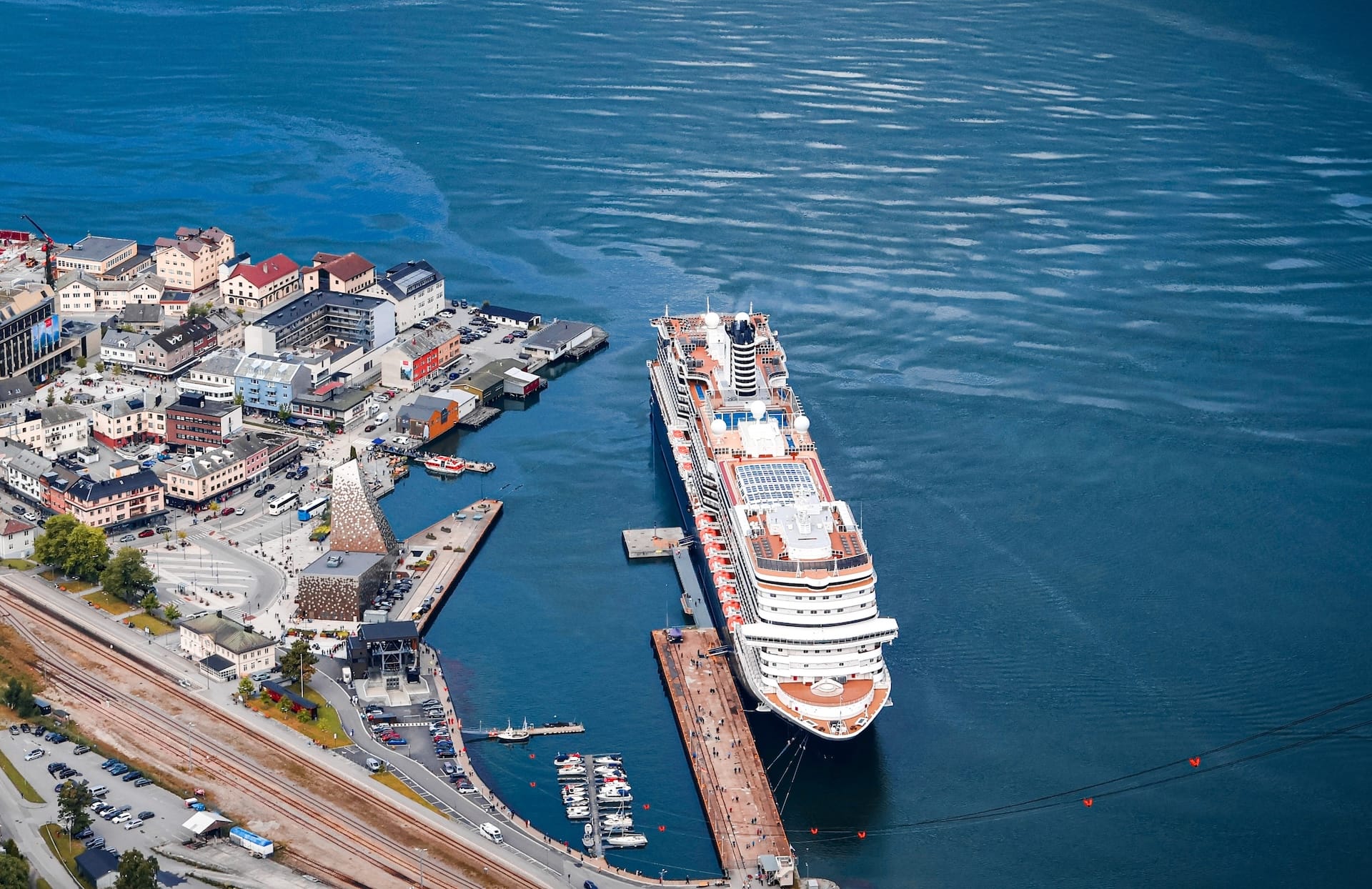
For cruise ports, the challenge is not only registering vessel arrivals. A cruise call involves agents, cruise lines, pilots, security, port operations, service providers, finance and often city or tourism stakeholders. The right PMIS should reduce manual coordination, create a clear digital trace, and give the port authority better control before, during and after each call.
Key elements of a modern cruise port PMIS
- Cruise call requests and vessel information
- Berth and long-term call planning
- Digital communication with agents and stakeholders
- Service requests and operational follow-up
- Waiting lists and status updates
- Access control and ISPS-related processes
- Invoicing basis and revenue capture
- Notifications, reporting and statistics
- Integrations with finance, national maritime systems and local port infrastructure
The main objective is simple: one shared operational picture for everyone involved.
Digital agent communication
Cruise ports often rely heavily on email, phone calls and manual follow-up with agents, cruise lines and local stakeholders. This works, until schedules change, call volumes increase, or important information ends up hidden in individual mailboxes.
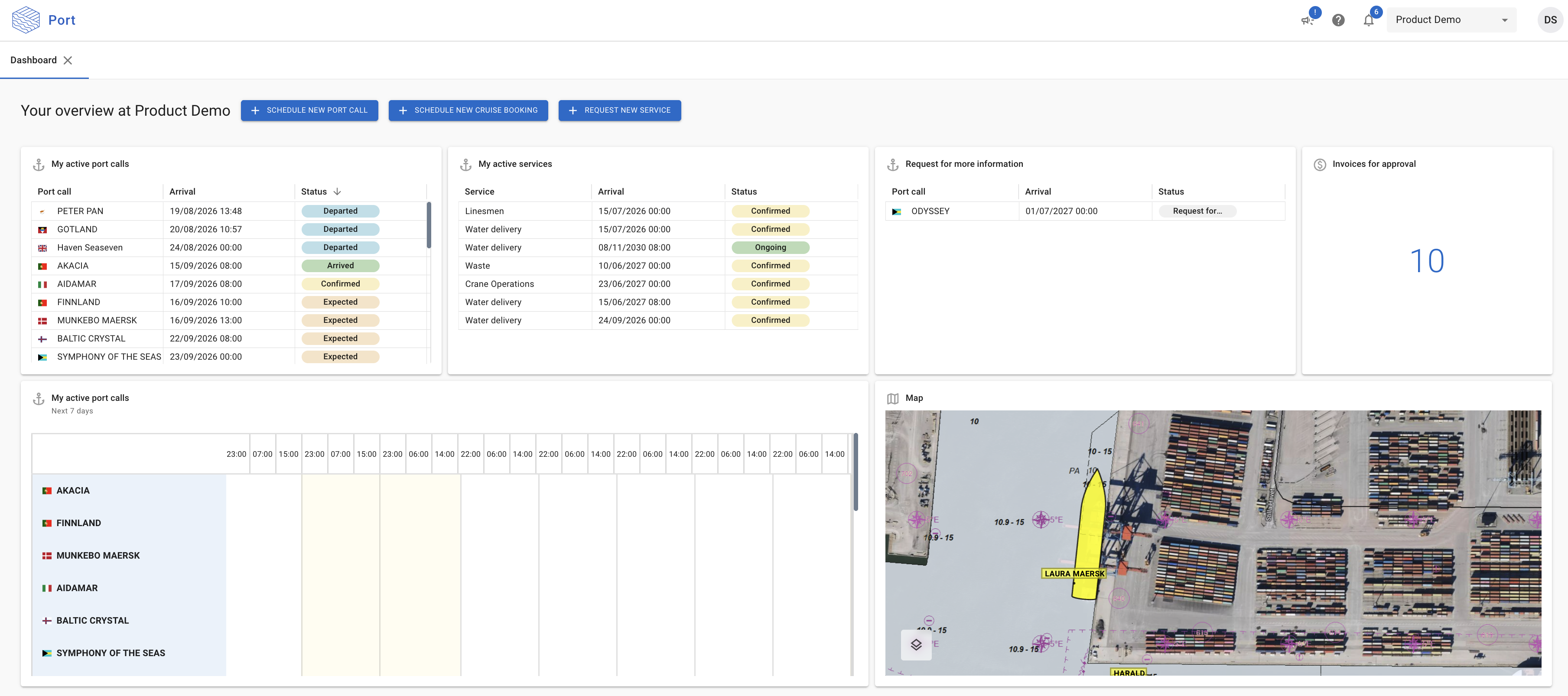
A strong PMIS should include a digital community or portal where agents and stakeholders can book or request cruise calls, share vessel information, request services, ask questions, upload documents and follow real-time status. The port authority should also be able to send confirmations, updates and notifications from the system, creating a clear trace of what was requested, changed, approved and delivered.
This is especially important when ports receive large cruise call lists from operators, often in Excel. Without a structured PMIS, these lists create manual registration work and limited feedback to the sender. A modern PMIS should make it easier to import, structure, validate and confirm cruise call information.
For more advanced workflows, the PMIS should also be able to integrate directly with operator or agent systems. This reduces double entry and creates a more reliable flow of information between the cruise operator, agent and port authority.
Berth planning, waiting lists and future restrictions
Cruise traffic does not always behave like cargo, ferry or general vessel traffic. Cruise calls are often planned far ahead, adjusted over time and sometimes managed through requests, prioritisation and waiting lists.
A PMIS for cruise ports should support preliminary and confirmed calls, berth conflicts, capacity checks, waiting lists, changes to arrival times, passenger numbers and service needs, and clear status visibility for both internal users and external stakeholders.
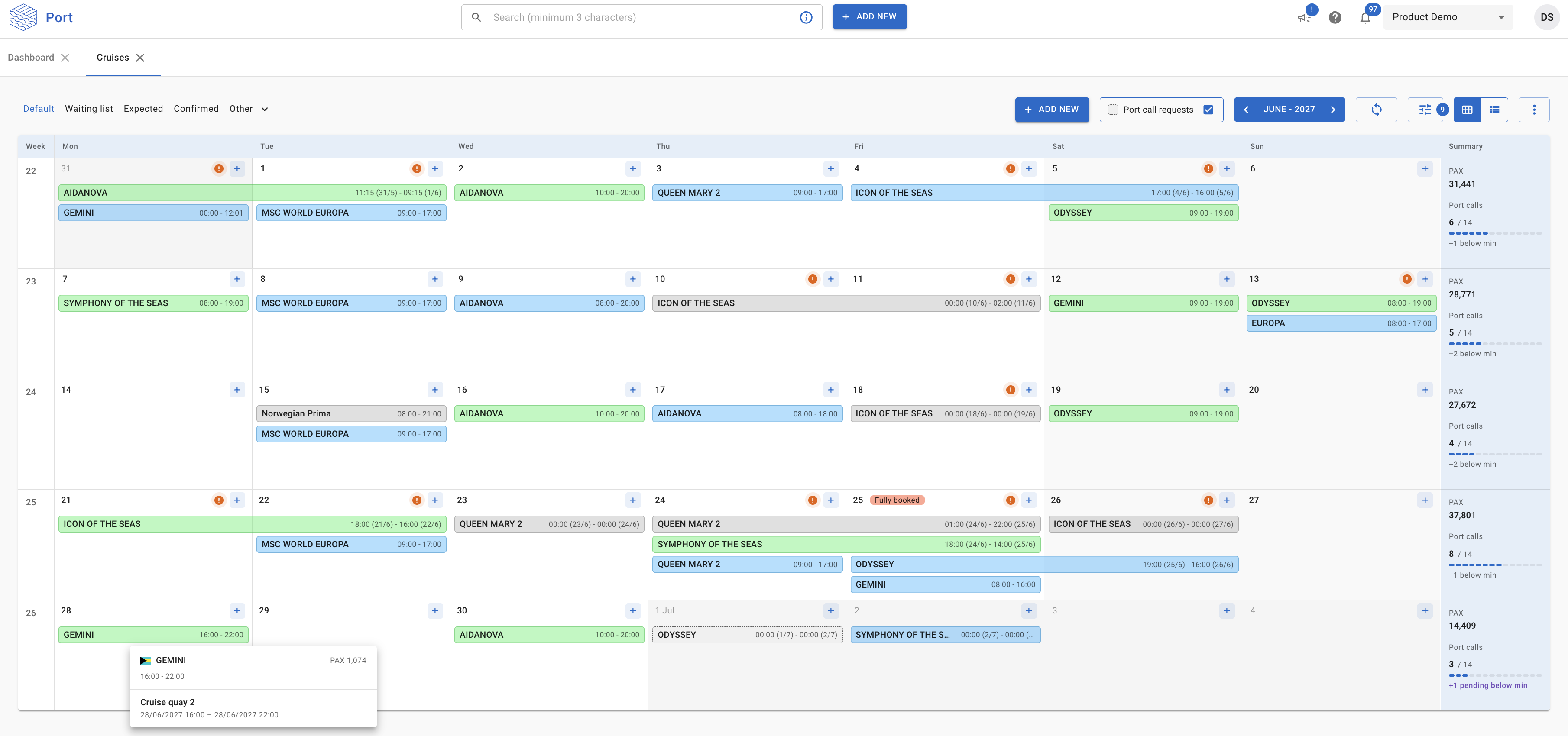
It should also be future-proof. Cruise ports increasingly need to operate within rules set by municipalities, port owners or public authorities. These may include limitations on number of calls, passenger volumes, emissions, vessel size, berth use, seasonality, shore power requirements or other local conditions.
The PMIS should help the port authority manage these rules in a structured way, document decisions and maintain a clear overview of accepted, pending and declined requests. The question is not only whether the system can manage today’s cruise schedule, but whether it can support how cruise traffic may be regulated tomorrow.
Services, security and revenue capture
Cruise calls often generate several billable activities: port dues, passenger fees, waste, water, security, mooring, equipment, extra services and other local charges.
A modern PMIS should help the port capture what was requested and delivered, and turn this into a reliable invoicing basis. This reduces missed revenue and gives finance better documentation behind each invoice.
Cruise traffic also creates a clear need for controlled access and traceability. The PMIS should support ISPS-related workflows and connect port call information with visitor handling, supplier access, long-term access rights, digital applications, approvals and gate or access control systems where relevant.
Integrations and implementation
A PMIS should not become another isolated system. For cruise ports, relevant integrations may include finance systems and National Maritime Single Window-related reporting, AIS and vessel traffic data, access control systems and cruise operator systems.
The key aspect is not only whether the PMIS has an API. The real question is whether the supplier has experience making integrations work in port environments.
Choosing a PMIS is also a process and change project. Look for a supplier that understands port operations, stakeholder workflows, invoicing, security and integrations. A professional implementation team should help the port clarify processes, configure the system, train users and support adoption after go-live.
Minimum requirements checklist
A cruise port PMIS should:
- Be cloud-based and easy to access
- Support port call requests and berth planning
- Include a digital agent/community portal
- Support large cruise call lists, confirmations and status updates
- Capture service requests and operational changes
- Support waiting lists and long-term cruise planning
- Support security and access workflows
- Create a reliable invoicing basis
- Provide useful reporting and statistics
- Include notifications for important updates
- Integrate with finance, maritime and local systems
- Be delivered by a team with real port experience
Finally
The best PMIS for a cruise port is not just a vessel register. It should help the port authority coordinate stakeholders, improve planning, reduce manual work, capture revenue and build a stronger data foundation for the future.
Cruise traffic is visible, time-sensitive and commercially important. The systems supporting it should be just as structured.