
Digital ISPS security contract with all parties working at the port
The changing geopolitical situation place new and higher demands on the security of ports.
Ensure ISPS compliance with less manual administration
Manual administration of security processes is vulnerable and costly. Maintaining parallel data sources across multiple systems and avoiding manual errors and human dependencies is challenging. If an anomaly occurs, there is often no digital traceability for analysis and reporting. Staffed gates, manual application workflows, and manual invoicing of contracts and card fees are costly and may themselves pose security risks.
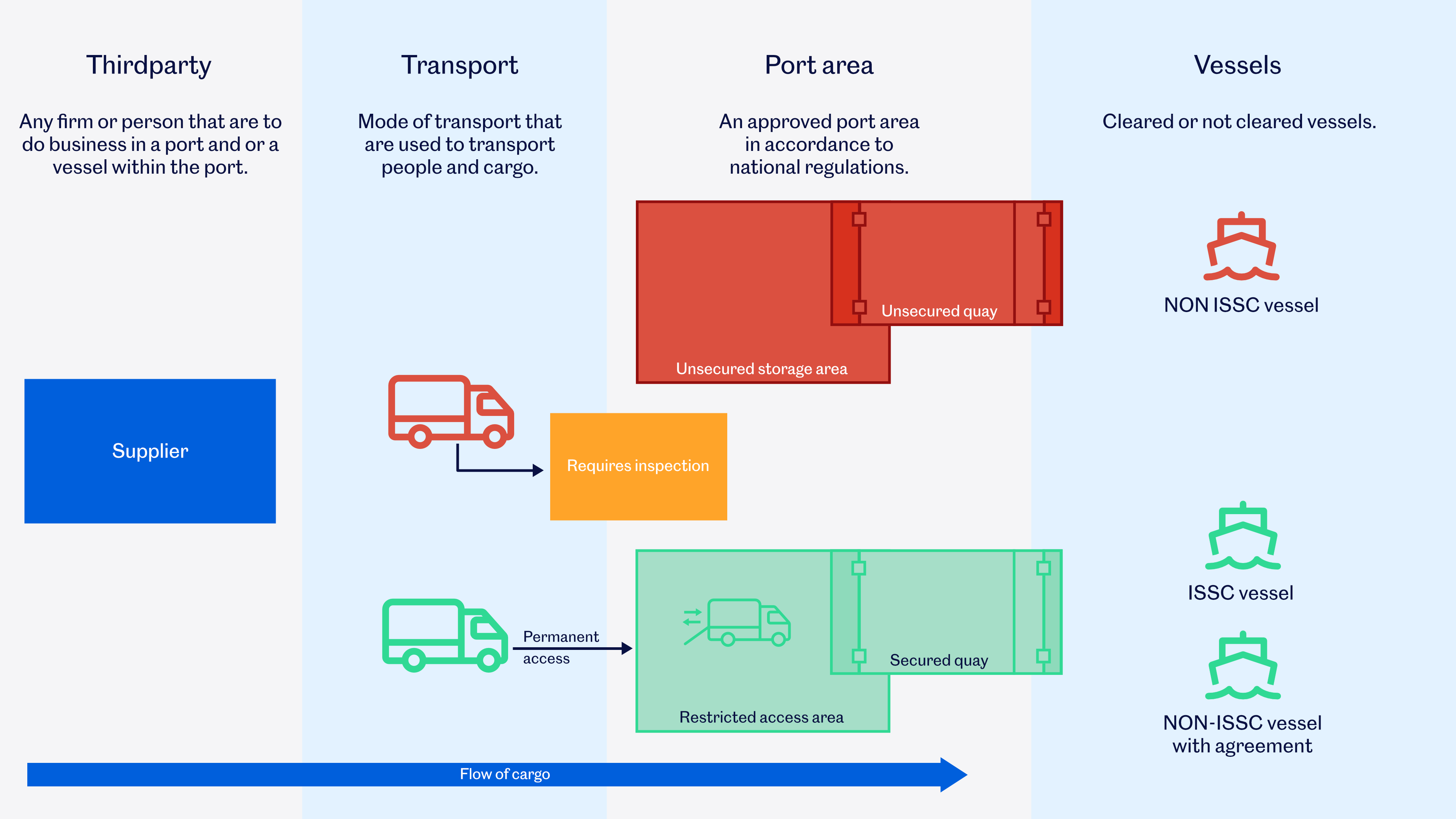
Security contracts regulate conditions and enable automated processes
Ports have a large number of stakeholders, who must work together to ensure the security of port areas. Carriers, terminal operators, tenants, and employees pass through the gates around the clock, and security must be maintained at all times. Temporary projects, such as construction work, must be also managed with the same level of security.
Port security contracts regulate company-specific authorisations and responsibilities and provide access to the system’s self-service functionality for cards and short term access. The contract also manages and monitors all training requirements and provides timely notifications before certificates expire and need renewal. The commercial agreement between a company and the port is also governed by the contract, enabling automatic invoicing of card and training fees.
The security contract is part of Port Security and is located at the top level of the port’s system hierarchy, controlling one or more underlying gate systems through integrations.
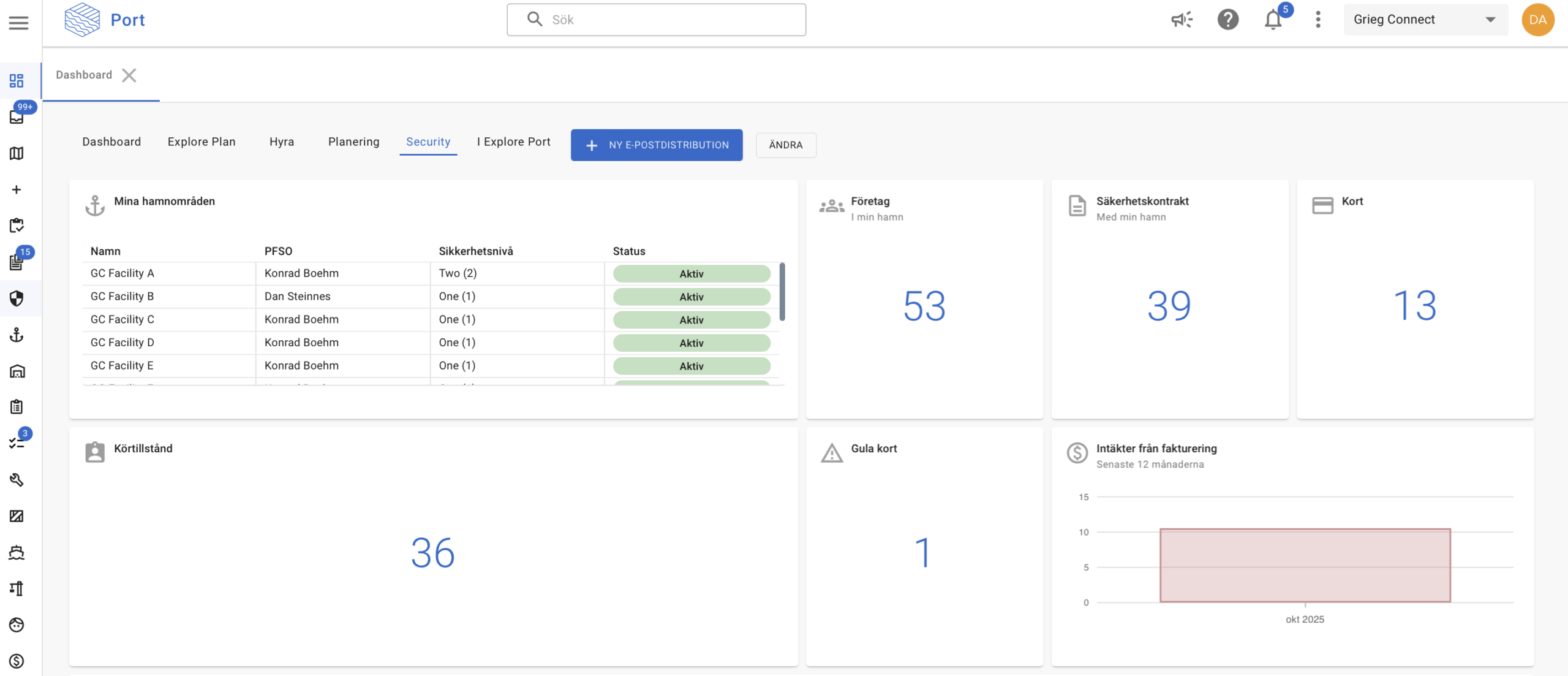
Establishing a digital security contract with the port
The process of establishing a security contract begins with an invitation from the port via email or a link on the port’s website. In the application, the company requests the required authorisations and rights, as well as the desired self-service functionality for cards and visits.
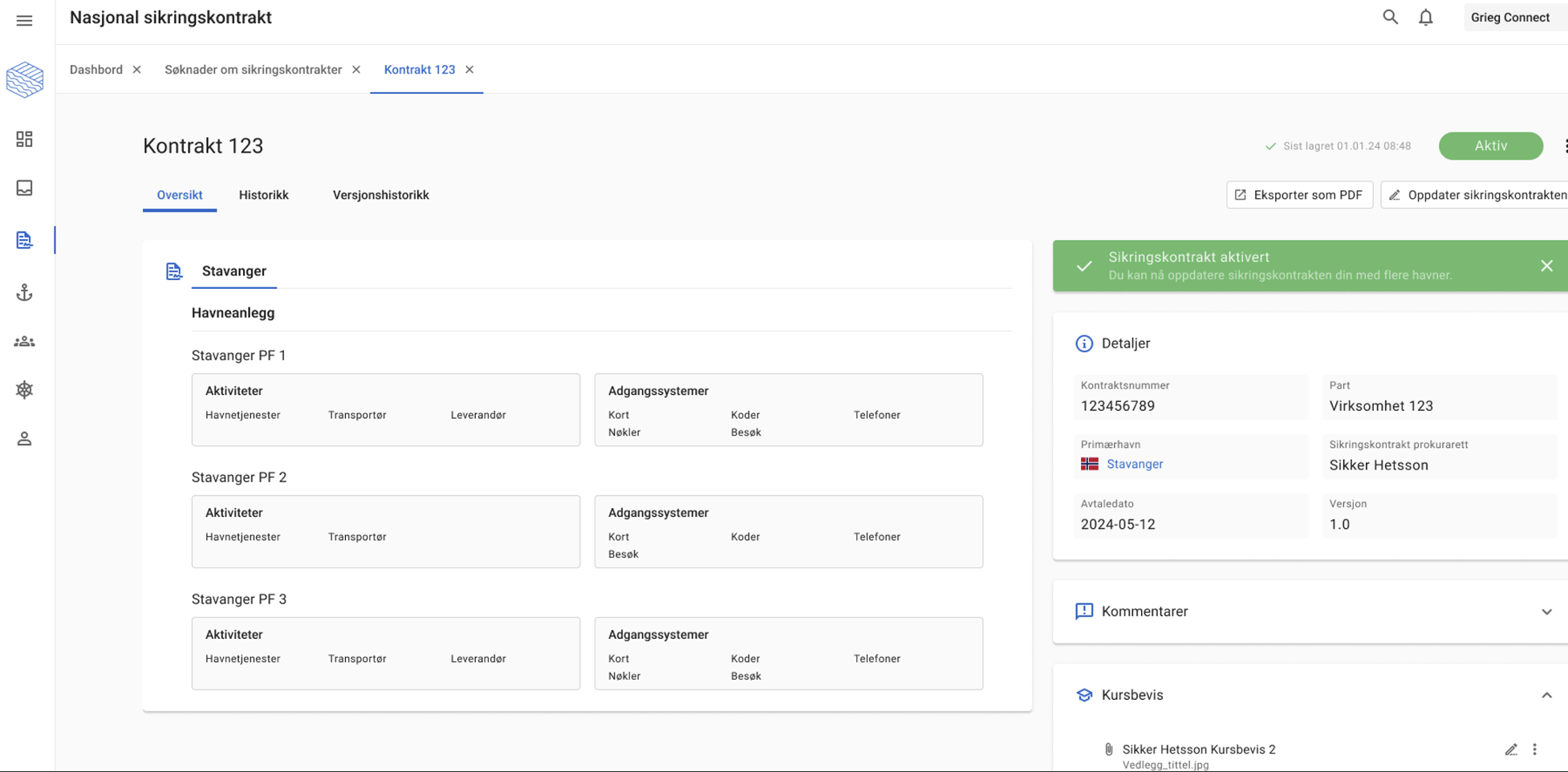
The contract is completed through a digital process involving authorised roles in both the port and the company and is finalised with a digital signature. After signing, the contract is activated, and employees can log in and manage their access according to the agreed terms.
Updating contracts when the security situation changes — digital traceability
The content of a security contract evolves over time, with new versions created and signed as needed. Each change is logged, ensuring full digital traceability.
Minor updates may include changes in the PFSO or adjustments to the security plan following an inspection. For major changes to conditions or procedures, the system’s built-in mass-communication functionality is valuable. Recipient groups can be created per company or per authorised person within specific areas, allowing configurable messages to be sent automatically. This functionality is also well suited for distributing security procedures, visit login links, and documentation to arriving vessels. Standard notification features provide reminders for upcoming visits and expiring access cards.
Cost or commercial model?
Historically, ISPS fees were often included as part of the port goods fee, typically reflecting the cost of security infrastructure such as fences, gates, and access systems. As security requirements and associated costs have increased, many ports now charge per security contract, per access card, and per training activity, supporting continued investment to meet evolving security requirements.
Read More: Port of Harstad Strengthens ISPS Compliance with Port Security